Parenthood and Inequality in Contemporary Families
- Date
- 30 March 2026
- Time
- 15:00 -16:30
- Room
- B6.12
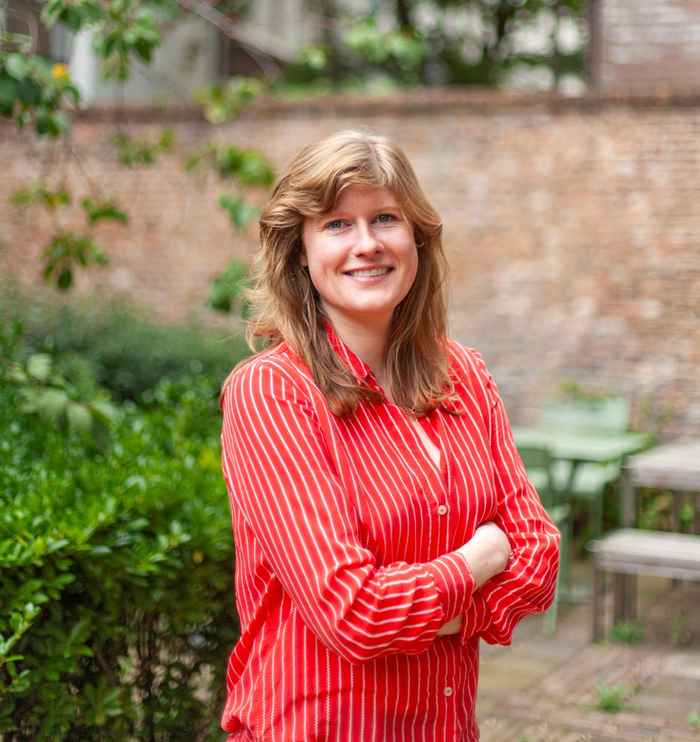
Dr. Van der Vleuten's research has two main goals. The first is to understand which mechanisms produce and reinforce inequalities in paid work and care after people become parents. She does this by studying family forms such as same-sex couples and adoptive couples. Because same-sex couples cannot rely on gendered divisions of labor based on sex, and adoptive couples are not shaped by pregnancy and childbirth, these families make it possible to separate the roles of biology, norms, and financial incentives in shaping work and family inequality.
The second goal is to increase our knowledge of work and family life in families that fall outside the heterosexual norm. Despite their growing visibility, these families have long been absent from quantitative research, largely due to a lack of suitable data. Maaike van der Vleuten addresses this gap by using large-scale population register data from five countries, showing that greater visibility and acceptance do not automatically translate into equal access to parenthood.
The final part of this talk therefore focuses on upcoming work on family formation among sexual minorities, examining who becomes a parent, when, and under what conditions, funded by an ERC Starting Grant.
This seminar is co-organised by AMCIS and the programme group Institutions, Inequalities, and Life courses (IIL) of UvA's Sociology department.
About the speaker
Maaike van der Vleuten works as an associate professor at the Netherlands Interdisciplinary Demographic Institute (NIDI) and at the Swedish Institute for Social Research (SOFI). Her research focuses on inequality in work and family life across the life course, with particular attention to queer and adoptive families. She has received funding for this work from the European Research Council (Starting Grant), the Dutch Research Council (VENI), and Riksbankens Jubileumfond. For more information, see www.maaikevandervleuten.com.